I am a worker, a husband and a father of two. I want my efforts to help leave them a better world. But increasingly, I wonder what future we are building.

We work too much. We get sick. There is not enough time to live, care for those we love and imagine tomorrow. At every election, new saviours appear. They promise to improve our lives, but all too often deliver more sacrifices and fewer rights.

What we want should be basic.

Every worker should have a decent home, healthy food on the table and time to spend with their family.

Every student should be able to look to the future with hope and find opportunities to build their life.

Every older person should grow old with security, health, enjoyment and respect — after a lifetime of contribution.

We build the world with our hands. We build homes, produce food, care for people and keep society running. We have a right to a dignified life in the world our work sustains.

But our needs have become commodities. Healthcare, education and housing are treated as businesses, even when this leaves people without care, without opportunities and without a roof over their heads.

Our lives are worth more than the profit anyone can make from them.

We are tired. Many of us live with anxiety, fear and discouragement. We have been taught to see this suffering as personal failure, as if survival depended on effort alone. As if we were not making that effort every single day.

Meanwhile, wealth and power become concentrated. Billions are fought over in races for markets, influence and control. We keep doing the sums to make it to the end of the month.

Our exhaustion helps keep everything as it is. When all our energy goes into surviving, little remains for participating, questioning and caring for one another. But the person beside us is also trying to survive.

How much does this war cost?

Why must we pay for education?

Why must we pay for healthcare?

Why is food so expensive?

Why can’t I buy my own home?

When did governments stop serving the people and start serving profit?

Why are we hearing hate speech again?

Why do they point one way and act the other?

It is in this landscape that the far right advances, turning insecurity into hatred and offering authoritarianism as the solution. In many places, it moves towards fascism: choosing enemies, feeding intolerance and treating rights as obstacles.

No people regain their dignity by persecuting another. No freedom is built by handing our destiny to those who demand obedience.

We also need a democracy in which our voices have consequences. Where economic power does not decide who will be heard. Where governments, large companies and digital platforms can be questioned and held accountable.

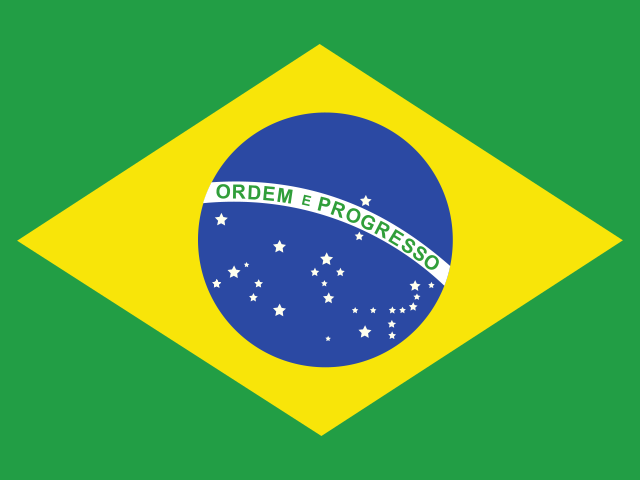
Brazil brought a breath of hope. The popular victory against the far right showed that resistance and victory are possible. That cry of “Enough!” can cross borders and inspire other peoples to regain confidence in their own strength.

We do not want an armed revolution, new wars or more violence. We want to organise, participate, demand accountability and bring about change. We want our indignation to become solidarity and collective action.

This is an invitation to workers, small business owners, students, older people and young people. To everyone who believes that the freedom and democracy we were promised must also exist in everyday life.

We do not have to agree on everything to defend what is essential: nobody should spend their life working without being able to live with dignity.

I want my children to have time to live, freedom to choose and a future that is more than a struggle to survive. I want that for your children too. For your parents, for your grandparents and for you.


Hope in action

There is no point in feeling all this and standing still. You need to act — and act NOW. Below are some practices that people in Brazil put into action with organisation, consistency and fervour.

A collective cause. No saviour.

Organise around a broad, collective cause focused on the interests of the people.

The organisation must not depend on a lone leader. If it does, be wary: they may want to use your strength and energy for their own causes.

Do not wait for this to come from political parties either. In general, they are slow, bureaucratic and analogue.

Influencers and artists have an obligation to participate. They need to use their digital influence and take risks. They cannot stand by and do nothing.

Young people who are better informed and prepared to identify fake news and false content generated by artificial intelligence should take the initiative. On the streets, these young people will invite workers, and older people will join them.

The organisation also needs a meeting point. In Brazil, WhatsApp groups were used to support and promote campaigns. Be creative in finding your own spaces for organisation.

A cause of the people must belong to the people.

Do not feed hatred or its reach

Do not comment on, interact with or distribute far-right content. Do not help the algorithm amplify these messages.

The strategy is to ignore it: do not turn provocation into a trending topic, do not help amplify what we want to fight.

Do the reverse. Make them come and attack you and boost your content.

Do not give your attention and energy to amplifying the message you oppose.

The playing field is unequal

We need to accept that we are fighting an unfair fight.

Digital platforms, megacorporations and governments have their preferences and interests. Social networks openly interfere with what gains visibility and what stays hidden.

Have backups, both for communication and for social networks. The system will try to ban this organisation, whether through laws or through manufactured pretexts.

Algorithms take sides. We cannot enter this struggle pretending the ground is neutral.

Online, a like is not enough

We need a presence and a massive, absurd volume of content around our cause.

Online, the proposal is an avalanche of content, across all networks, to confront an algorithm we consider rigged.

Liking is not enough. We need to create, share, save, send and spark interest so that the content is considered relevant and reaches more people.

Our cause needs to circulate on an obscenely massive scale.

On the streets, each person brings one more

We need to step away from our screens and speak face to face with people. On the streets, no algorithm decides who can hear our voices.

Each person brings one more. Those who arrive invite someone else. Our presence on the streets also produces content for the online world, connecting the two spaces.

Choose where to focus your efforts. Those who are already convinced do not change their minds. Our energy is limited.

On the streets, be 100% peaceful. Do not create negative images that could be cropped and used to discredit the entire cause. The state apparatus will be there; do not give them violence they can use against us.

Resist peacefully. Do not produce the images they will use to discredit us.

Stay alert to disinformation and vested interests

Mass disinformation campaigns can be funded, distributed and amplified by those in power.

Do not trust the press blindly. Media outlets have owners, positions and interests. What they choose to show — and what they choose to omit — matters too.

That is why we need to make noise. A lot of noise. To pressure the press into reporting and make it impossible to pretend not to see.

Do not give anyone the power to tell our story alone.

Be creative

Memes, dances, the appropriation of symbols: creativity is part of how we express our cause.

Use these forms of expression to draw attention and give the cause visibility. Each country needs to find its own formula for breaking out of its bubble.

Our indignation can also have humour, movement and creativity.

Compromise to grow

The agenda is simple: sovereignty, dignity, freedom and democracy.

Choosing allies only among those who agree with us on everything is what divides us. The enemy of my enemy can be my ally in this shared cause.

We need to accept differences and make concessions to build something bigger than each isolated group.

Compromise to grow. Join forces around what is essential.